

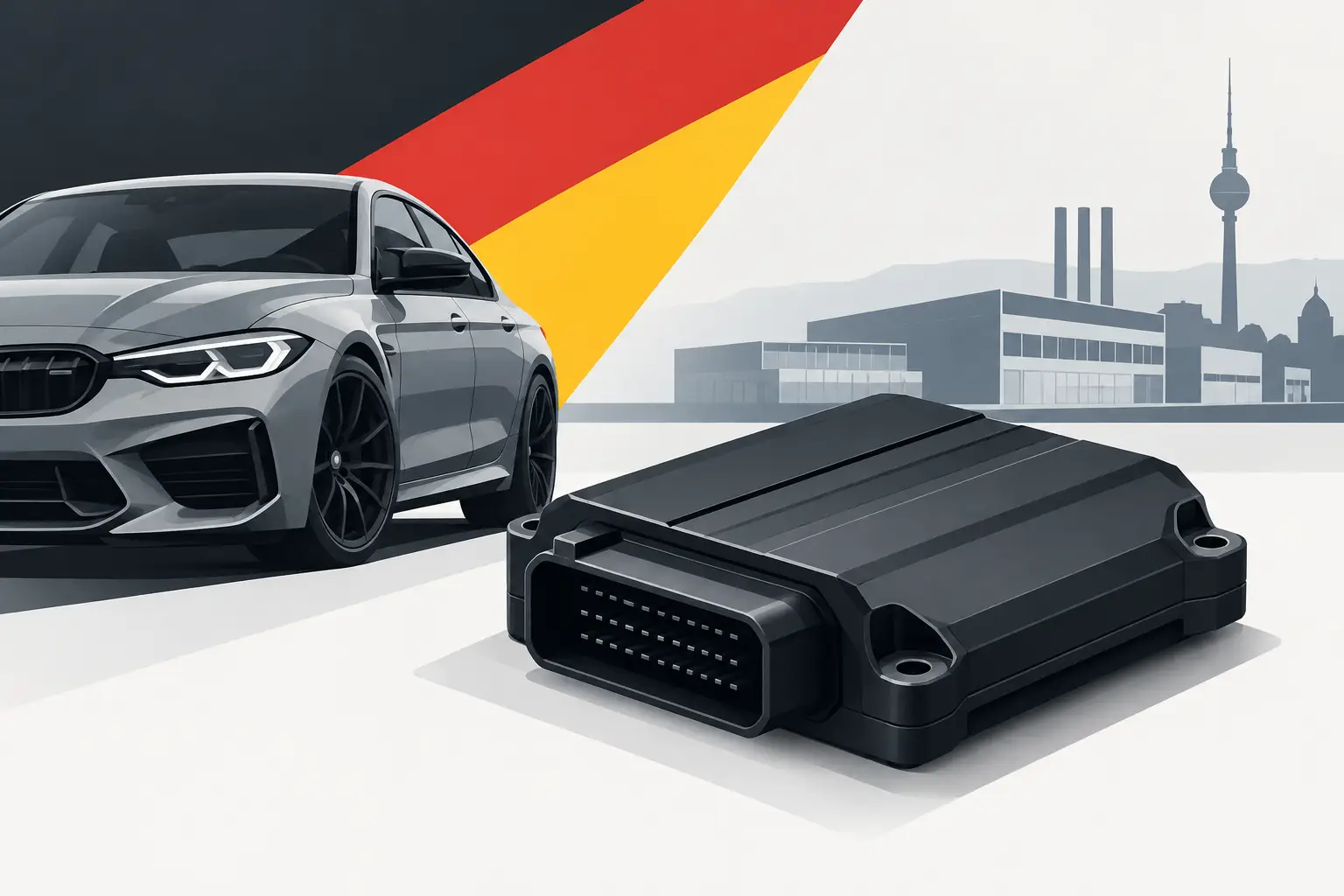
Why a German Made Tuning Box Is Different
A late-model diesel ute should not feel flat when it is loaded, towing, or pulling into fast-moving traffic. A German made tuning box is built for owners who want stronger, smoother response from the engine without turning a straightforward upgrade into a workshop project. The difference is not a badge on the casing. It comes down to how the module is engineered, programmed and matched to the exact vehicle.
In a market full of performance chips that look remarkably similar, manufacturing origin and vehicle-specific calibration are worth examining closely. A properly developed tuning module should work with the signals and operating characteristics of your particular engine, not rely on a generic setting intended to suit dozens of unrelated vehicles.
What Makes a German Made Tuning Box Different?
A German made tuning box is designed, developed and manufactured within a quality-controlled engineering environment. That matters because modern diesel and petrol engines rely on tightly managed electronic systems. Fuel delivery, boost, rail pressure and sensor feedback all need to work together cleanly if the vehicle is to deliver the more responsive, usable performance owners expect.
The best modules are not universal boxes with a different label, a new sticker and a hefty markup. They are programmed for defined engine applications, taking account of the vehicle’s make, model, fuel type, transmission and variant. Two utes from the same manufacturer can use different engine calibrations across model years, so selecting by vehicle family alone is not enough.
German engineering has a strong reputation in the automotive sector because it places emphasis on consistency, component quality and repeatable results. For a tuning box, that translates to a properly protected module, purpose-built wiring connections and calibration developed for a known application rather than guesswork.
Vehicle-Specific Programming Is the Point
A tuning box works by interpreting and optimising signals from sensors and sending them to the engine control unit. It is a precise job. If the module has not been programmed for the vehicle in front of you, it cannot deliver the level of refinement that makes an upgrade worthwhile.
Vehicle-specific programming helps produce power in a way that feels natural behind the wheel. Rather than simply chasing a headline figure, the aim is stronger mid-range pull, cleaner throttle response and more confidence when the vehicle is carrying tools, loaded for a trip or towing a caravan or boat.
That usable middle section of the rev range is where many Australian drivers notice the biggest benefit. A diesel 4WD does not need to be driven like a race car to feel better. It needs torque available when climbing, overtaking, joining the highway or moving a loaded tray. Likewise, a passenger vehicle benefits from easier acceleration and less need to press the throttle hard in everyday driving.
Why the exact variant matters
A vehicle selector that asks for the manufacturer, model, year, engine, fuel, transmission and variant is doing more than collecting details. It is narrowing the selection to the module and programming intended for that configuration.
This process helps avoid the common mistake of buying a supposedly compatible box based on broad claims such as “fits most common-rail diesels”. Those claims may sound convenient, but they do not tell you whether the product has been developed for your engine’s actual electronic setup.
Before ordering, confirm the details on your registration papers and vehicle build information. If your model sits around a changeover year, has a special edition badge, or is offered with more than one engine output, accuracy becomes even more valuable.
Plug-In Performance Without the Workshop Runaround
One of the practical advantages of a quality tuning module is plug-in installation. The module is supplied with vehicle-specific connectors designed to integrate with the relevant engine sensors. There is no need for an extensive mechanical conversion just to improve response and drivability.
For owners who are comfortable working under the bonnet, installation can be a manageable DIY task. Follow the supplied instructions, work with the engine off and cool, and take your time locating each connection. Route the loom neatly, keep it away from excessive heat and moving components, and secure the module in an appropriate position.
The convenience is significant, but it should not lead to shortcuts. A clean installation protects the connectors and makes future inspection easier. If you would rather have someone else fit it, a trusted automotive professional can assist, but the product itself should not require an elaborate workshop-only process.
Performance and Fuel Economy: What to Expect
A well-matched tuning box can improve engine response and usable performance, particularly in the lower to mid-range where utes, SUVs and 4WDs do much of their work. Drivers often describe the result as a vehicle that feels less hesitant and more willing when the throttle is applied.
Fuel economy can also improve when the extra torque means the engine works less hard for a given task. This is especially relevant for highway driving, touring and towing. However, fuel use is never determined by a tuning module alone. Vehicle load, tyre pressures, driving speed, terrain, towing weight, fuel quality and throttle habits all play a part.
That is why sensible expectations matter. If the stronger response encourages harder acceleration at every set of lights, fuel consumption may not improve. If you use the additional torque to maintain momentum and reduce unnecessary throttle input, there is a better opportunity to see an efficiency benefit.
The goal is not a dramatic personality change that makes the vehicle awkward to drive. It is a more capable, more relaxed feel that suits how Australians actually use their vehicles.
How to Spot a Generic Rebadged Module
The tuning-box category can be confusing because generic modules are frequently sold under different names. The branding may change, but the product underneath can be the same broad-application unit offered across multiple marketplaces.
Look past the advertising language and ask practical questions. Is the product genuinely made in Germany, or merely described with vague European-sounding wording? Is there a clear process for matching the unit to your exact vehicle? Are the connectors vehicle-specific? Does the seller explain the programming approach and provide straightforward installation guidance?
Be cautious of claims that promise identical gains for every engine, every model year and every driving condition. Proper calibration recognises that vehicles differ. It also recognises that a towing-focused diesel owner and a petrol performance enthusiast may value different outcomes from the same type of upgrade.
Price deserves context too. A low upfront price can be tempting, but it does not automatically represent value if the product is generic, poorly documented or difficult to identify by origin and specification. Buying a module that has been developed for the vehicle is a more informed decision than buying the cheapest black box with a universal sales pitch.
Choosing the Right Module for Your Vehicle
Start with compatibility, not horsepower claims. Enter every requested vehicle detail into the selector and choose the precise engine and transmission combination. If there is any uncertainty, resolve it before purchasing rather than assuming a close match is good enough.
Next, consider how you use the vehicle. A daily-driven diesel ute that regularly tows may place greater value on mid-range torque and efficiency during steady cruising. A weekend 4WD may need stronger response when loaded with touring gear. A petrol passenger-car owner may be focused on sharper acceleration and a more engaging drive. The right tuning box should support the way the vehicle earns its keep.
Finally, choose a supplier that can clearly explain what it sells. Chip My Diesel focuses on German-designed, developed and manufactured modules with exact vehicle programming, because Australian owners deserve more than a rebadged unit and a vague compatibility promise.
A tuning box should make your vehicle feel more willing, not more complicated. When the product is genuinely German made, correctly programmed and selected for your exact variant, you can enjoy a practical upgrade that suits the road, the load and the job ahead.
Happy Driving!