

Are Plug-In Modules Reversible? What to Know.
A better throttle response on the way up the range and more useful pulling power for towing are appealing outcomes. But before fitting any performance product, sensible owners ask the practical question: are plug in modules reversible?
With a properly engineered, vehicle-specific plug-in module, the answer is generally yes. The module is designed to connect through purpose-made wiring looms and factory-style plugs, rather than requiring wires to be cut, soldered or permanently altered. Remove it correctly, reconnect the original factory plugs and the vehicle returns to its original physical configuration.
That distinction matters. Not every product sold as a performance chip is built or calibrated to the same standard. A reversible installation depends on the module being made for the exact vehicle, engine and connector arrangement – not simply being a generic box with an adaptor lead.
What “reversible” means with plug-in modules
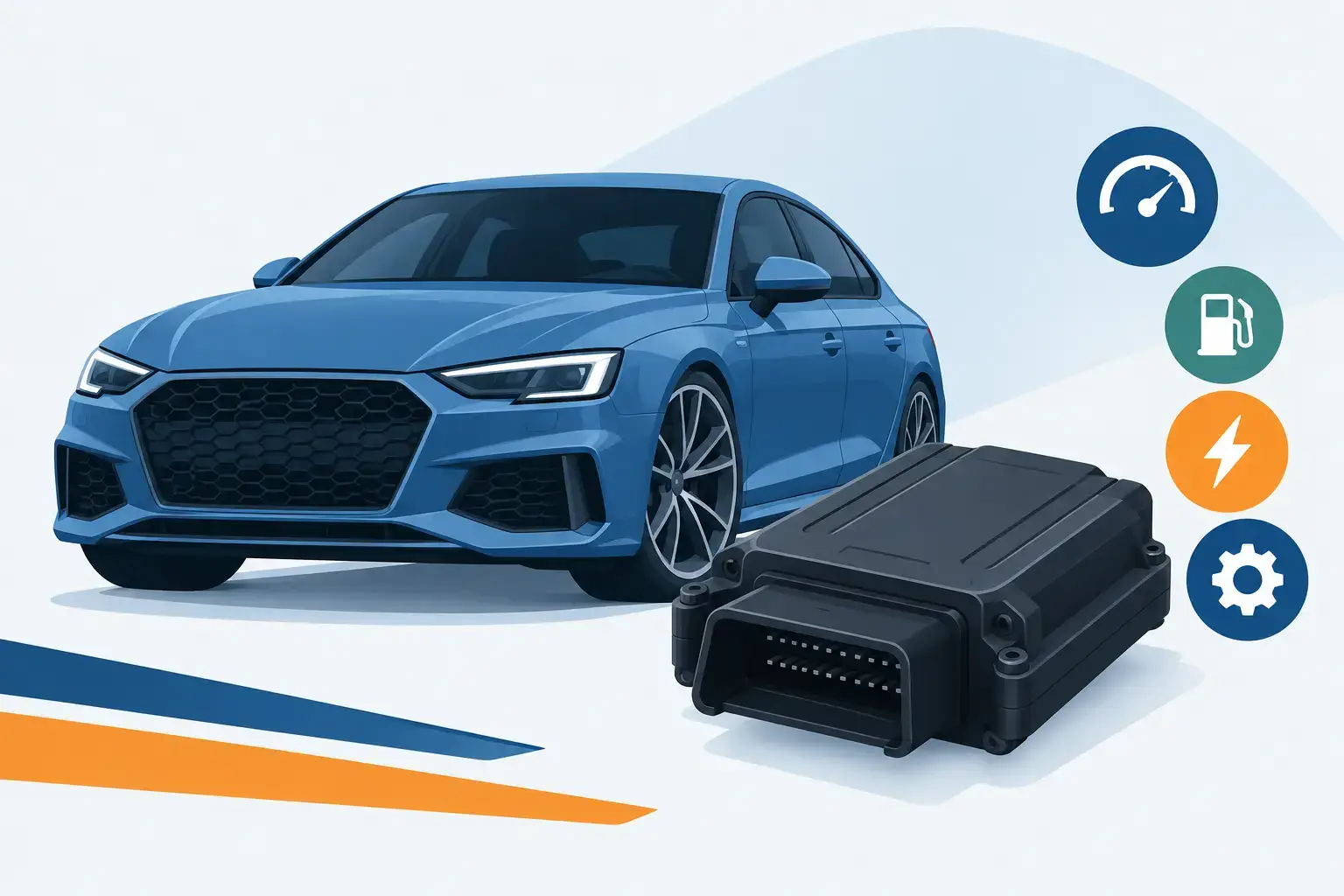
A plug-in performance module sits between selected engine-management sensors and the vehicle’s existing wiring harness. It reads and adjusts signals within parameters set for that specific application, helping the engine deliver stronger, smoother performance and, in suitable driving conditions, improved fuel economy.
The module does not replace the vehicle’s original engine-management hardware. Its wiring harness uses matching connectors so the installation can be undone without modifying the factory loom. In practical terms, reversibility means there is no need to splice cables, drill into wiring, or make a permanent mechanical conversion.
Once removed, the factory connectors are plugged back into their original locations. The module and its harness can then be retained for the appropriate vehicle application or refitted later.
This is one of the strongest advantages of genuine plug-and-play technology. You can gain a calibrated performance upgrade without turning installation into a major workshop project.
Are plug-in modules reversible on every vehicle?
The installation principle is reversible, but the right answer always depends on the product and the vehicle. Modern diesel utes, 4WDs, SUVs and passenger vehicles can have several engine outputs, transmission combinations and sensor layouts within the same model range. A module that appears to suit a vehicle at a glance may not suit its exact variant.
For that reason, a product should be selected using the full vehicle specification: make, model, year, engine, fuel type, transmission and variant where required. This is how the correct loom, connectors and vehicle-specific programming are matched to the engine.
A correctly matched module should fit its intended connection points cleanly. If plugs do not align naturally, connector locks will not engage, or a lead must be stretched to reach, stop and check the application details. Forcing a connector is never part of a proper plug-and-play installation.
The quality of the module matters just as much as fitment. Engineered products use dedicated programming for the vehicle application and looms designed for the operating environment under the bonnet. Generic rebadged modules may look similar in a product photo, but appearance alone tells you very little about calibration, connector quality or compatibility.
How a reversible module is removed
Removal is straightforward when the original installation has been carried out carefully and the supplied instructions have been followed. Work on a cool vehicle, switch the ignition off and keep the key or remote away from the vehicle while handling engine-bay connectors. Refer to the instructions supplied for your specific module and vehicle.
The basic process is as follows:
- Open the bonnet and locate the module and its harness at the original installation points.
- Release each connector using its locking tab – never pull on the wiring itself.
- Disconnect the module harness and reconnect the vehicle’s original factory plugs to their matching sensors or harness connectors.
- Secure any factory wiring in its original position, remove the module and check that all connector locks are fully engaged before closing the bonnet.
Alternatively
If you pick up one of our Tuning Box Removal Plugs, you can simply attach it to the end of the harness, so you don’t need to need to put everything back to exactly how it was. This can be especially helpful if you need to temporarily disable it for whatever reason.
What stays unchanged when the module is removed?
With a true plug-in system, the vehicle’s original physical wiring remains intact. There are no cut-and-joined sections of loom to hide, no extra switches mounted in the cabin and no need to remove factory components to return the connection layout to standard.
The module itself is also separate from the vehicle. It can be removed from its mounting location along with its dedicated harness, leaving the original connectors rejoined. That is why careful routing during installation pays off. A neat installation is easier to inspect, easier to remove and less likely to leave a loose cable or clip behind.
It is worth separating this from products described loosely as “chips”. Some older-style or poorly designed products can involve intrusive wiring changes. Others may use universal leads and uncertain sensor compatibility. Those are not equivalent to a vehicle-specific, plug-in module with factory-style connections.
The installation details that make removal easy
Reversibility is built into the product design, but installation discipline still matters. Take photos of the original connector positions before fitting, especially if there are several similar plugs in the same area. Keep the module’s instructions with the vehicle paperwork so they are available when you want to remove or refit it.
Mount the module in a secure, protected location recommended by the manufacturer. Leave enough slack in the harness for normal engine movement, but not so much that wiring can rub or hang near heat sources. Use the supplied mounting materials and cable ties where specified, rather than improvising with whatever happens to be in the shed.
Do not discard the original packaging, protective caps or instructions. They make storage and future refitting more orderly, particularly for owners who keep a vehicle for years or move between standard and enhanced performance setups as their needs change.
Why vehicle-specific programming is part of the answer
A plug-in connection is only half the story. The other half is the calibration inside the module. The aim is not simply to add a box under the bonnet, but to provide controlled, usable performance matched to the vehicle’s engine characteristics.
That is why exact application matching should come before a purchase decision. A well-designed module for a diesel touring vehicle should support confident overtaking and better towing response without making the power delivery feel abrupt. For a passenger car, the priority may be cleaner acceleration through the mid-range. Either way, the programming must suit the particular engine rather than apply a one-size-fits-all signal adjustment.
German-designed and manufactured modules, such as those supplied by Chip My Diesel, are built around this vehicle-specific approach. The product choice starts with the exact vehicle details, then the module, loom and calibration are matched accordingly. That makes the fitting process clearer and ensures removal follows the same clean, connector-to-connector logic.
Before you refit a module
If a module has been stored for a while, inspect the harness before putting it back on the vehicle. Check the plugs, seals, pins and cable insulation for dirt, moisture or visible wear. Confirm it is still the correct module for the exact vehicle it will be fitted to, particularly if you have changed vehicles or the vehicle has been modified since the original installation.
Do not assume a module can move between similar-looking models just because the badge is the same. Engine codes, fuel systems and connector arrangements can vary across model years and variants. The vehicle selector and fitment information should always have the final say.
A properly matched plug-in module gives Australian drivers a practical path to stronger usable performance without a permanent wiring conversion. Choose an engineered, vehicle-specific product, install it neatly and keep the instructions handy – then removal is simply part of the plug-and-play design, not a complicated job waiting down the track.
Happy Driving!