

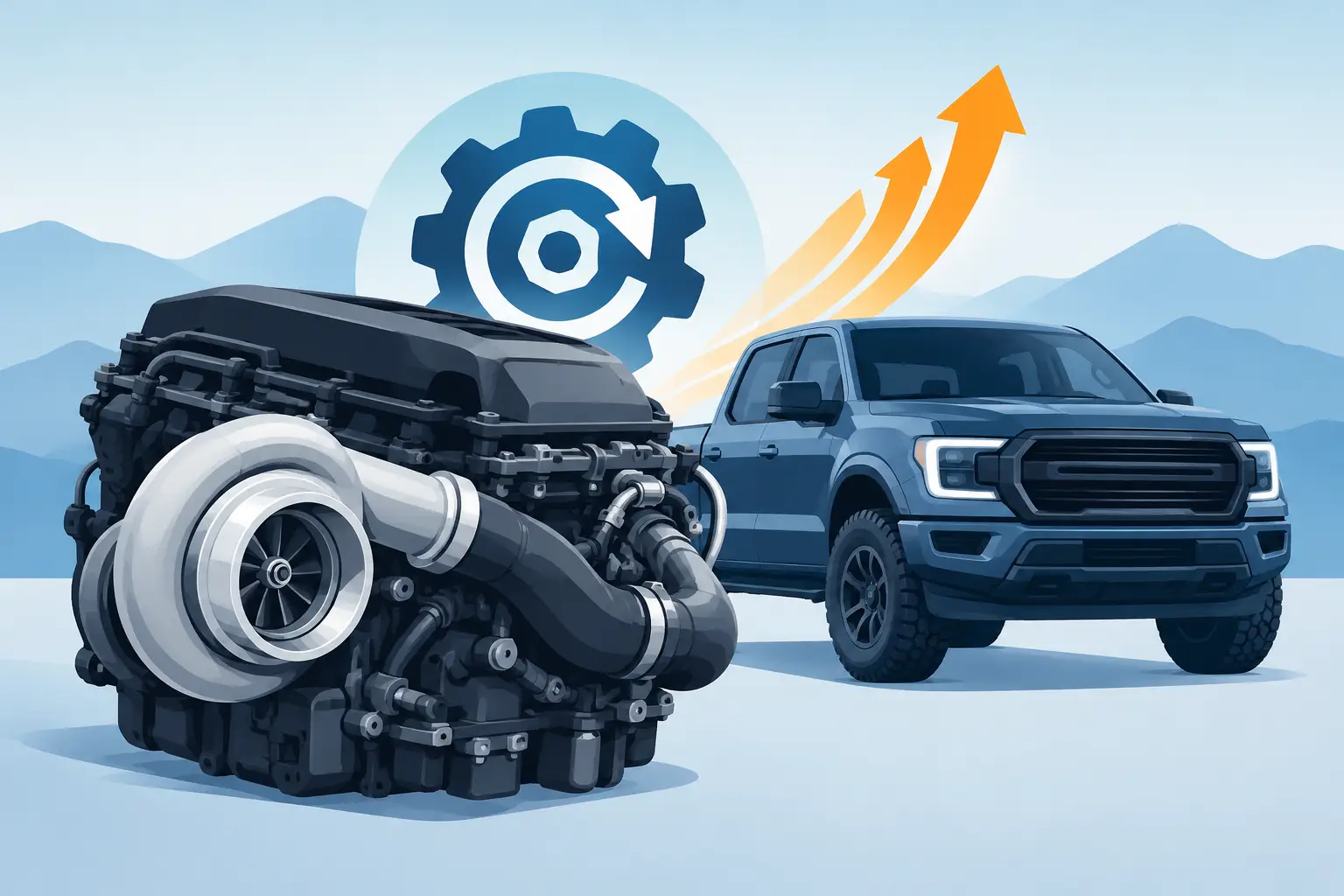
How to Improve Turbo Diesel Torque
A turbo diesel does not need a huge peak power figure to feel properly strong. What most ute, 4WD and SUV owners actually notice is torque arriving earlier, building smoothly and holding on when there is a van, tools or a loaded tray behind them. Knowing how to improve turbo diesel torque starts with improving the whole driving experience, not chasing a headline number.
The best result is usually a combination of a healthy engine, sensible supporting maintenance and a vehicle-specific performance solution calibrated for the exact vehicle. Get those foundations right and your diesel can feel more responsive in traffic, more relaxed on the highway and more capable when towing.
How to Improve Turbo Diesel Torque Where It Counts
Torque is the pulling force that gets your vehicle moving and keeps it moving under load. In a turbo diesel, it is shaped by how efficiently the engine receives air and fuel, how quickly the turbocharger responds, and how the factory engine management system controls delivery.
A useful torque improvement should not feel like an abrupt surge. It should feel controlled: cleaner response from low revs, fewer unnecessary downshifts, stronger mid-range acceleration and less effort when climbing hills. For many Australian owners, that usable mid-range is far more valuable than extra performance right at the top of the rev range.
Before adding anything, be clear about the job your vehicle does. A lightly loaded daily driver may benefit most from sharper response and easier overtaking. A touring 4WD or towing ute needs smooth, accessible torque that supports confident progress without constantly working the engine and transmission through the gears. The right approach depends on the vehicle, engine, transmission and intended use.
Start With a Healthy Diesel Engine
Performance upgrades work best when the vehicle is already operating as it should. If response has become lazy or fuel use has increased, maintenance may be the first place to look rather than expecting an add-on to solve an underlying issue.
A clean air filter is a simple but worthwhile starting point. A restricted filter limits airflow, which matters when the turbo is trying to supply the engine under acceleration or load. Check it at the intervals recommended for your driving conditions, and inspect it more often if the vehicle sees dusty tracks, work sites or regional roads.
Fuel quality and fuel-filter condition also matter. Modern common-rail diesels rely on precise fuel delivery, so use suitable diesel from reputable outlets and keep filter servicing up to date. If you have noticed hesitation, inconsistent acceleration or difficult starting, have the fuel system checked by a qualified technician before making performance changes.
It is also worth inspecting hoses, clamps and intercooler plumbing. A split hose, tired clamp or small boost leak can reduce the pressure available to the engine and leave a turbo diesel feeling flat. Likewise, sensors involved in airflow and boost control need to be operating correctly for the engine to deliver consistent performance.
Choose Vehicle-Specific Tuning, Not a Generic Box
Once the engine is in good condition, a properly engineered tuning module is one of the most direct ways to improve usable diesel torque. The key word is properly engineered.
Not all performance chips are developed to the same standard. Generic modules that are rebadged and sold across a broad range of vehicles may look convenient, but they do not offer the precision that comes from programming for a particular engine, fuel system and vehicle specification. Diesel engines vary significantly between model years, outputs, transmissions and variants. A module should reflect those differences.
A vehicle-specific system is calibrated to work with the characteristics of your exact application. That allows for a more refined result: stronger torque delivery, smoother throttle response and performance that feels integrated with how the vehicle is driven day to day.
At Chip My Diesel, the focus is on German-designed and manufactured modules that are programmed for the individual vehicle rather than treated as a one-size-fits-all product. The vehicle selector is more than a purchasing step. By matching the make, model, engine, fuel type, transmission and variant, it helps ensure the selected module is appropriate for the vehicle in front of you.
For owners who want an accessible upgrade, plug-in technology is another practical advantage. It avoids the need for an extensive mechanical conversion and can be installed by a capable owner following the supplied instructions. The result is a straightforward path to better response without turning the vehicle into a workshop project.
What Good Torque Delivery Feels Like
The difference is often most obvious in the middle of the rev range. You may find the vehicle moves away from lights with less throttle, holds speed more easily on an incline or requires fewer gear changes when towing. On an automatic, improved torque can make the vehicle feel less busy because there is more pulling strength available before the transmission needs to change down.
More torque does not mean every situation calls for maximum throttle. A well-calibrated improvement gives the driver more flexibility. You can make calmer progress with a lighter right foot, which may also support fuel economy depending on load, terrain, driving style and how often you use the additional performance.
Support Torque With Sensible Hardware Choices
There is no single bolt-on part that suits every turbo diesel. Factory intake and exhaust systems on many modern vehicles are already well engineered, and replacing parts simply because they are marketed as performance upgrades does not guarantee a worthwhile result.
If you are considering intake or exhaust changes, choose quality components designed for your exact vehicle and intended use. Fitment, heat management, filtration and legal compliance all deserve attention. A change that sounds louder is not automatically a change that delivers smoother, more useful torque.
For serious towing or touring use, cooling system condition should be part of the conversation. Make sure coolant levels are correct, the radiator is clean externally, and servicing is current. Long climbs, hot weather, sand driving and heavy loads all increase the demands placed on a diesel drivetrain. Good maintenance gives you confidence to use the performance your vehicle has available.
Do not overlook the transmission, either. Fresh transmission fluid where required, correct servicing and sensible towing technique all help preserve smooth operation. Torque is only useful if it reaches the wheels in a controlled and predictable way.
Improve the Way Your Diesel Uses Its Torque
Driving technique can make a surprisingly large difference, especially in a turbo diesel. These engines generally work best when allowed to use their mid-range rather than being labouring at very low revs in a high gear. If the vehicle is towing and begins to slow on a climb, selecting a lower gear early can keep the engine in a more effective part of its torque band.
On loose surfaces, smooth throttle inputs matter. Sudden applications can break traction and make progress harder, while measured throttle lets the vehicle use its torque efficiently. In sand, mud or steep low-range work, appropriate tyre pressures, gear selection and momentum often matter as much as outright engine output.
When towing, load distribution is equally important. A correctly loaded trailer, appropriate towball weight and properly adjusted weight distribution equipment where applicable will make better use of your vehicle’s capability. More torque can improve the towing experience, but it does not replace sound loading practice or the vehicle manufacturer’s towing limits.
Avoid Chasing Numbers Alone
Dyno figures can be useful for comparison, but they do not tell the whole story. A torque curve that arrives smoothly and stays consistent through the rev range may feel better on the road than a larger peak figure that appears only briefly.
Focus on the outcomes you can actually use: easier merging, more confident overtaking, reduced gear hunting, steadier towing and a vehicle that feels less strained under normal load. These are the improvements that change ownership day after day.
Before selecting a module, confirm every vehicle detail carefully. Model badges can be misleading, and small differences in engine output, transmission or year can affect compatibility. Choosing a precisely programmed product is not a detail to gloss over – it is central to achieving a refined result.
A stronger turbo diesel should feel like the vehicle is doing its job with less fuss. Keep the maintenance current, select equipment designed for your exact variant, and let smooth, usable torque do the hard work when the road, load or weekend demands it.
Happy Driving!