

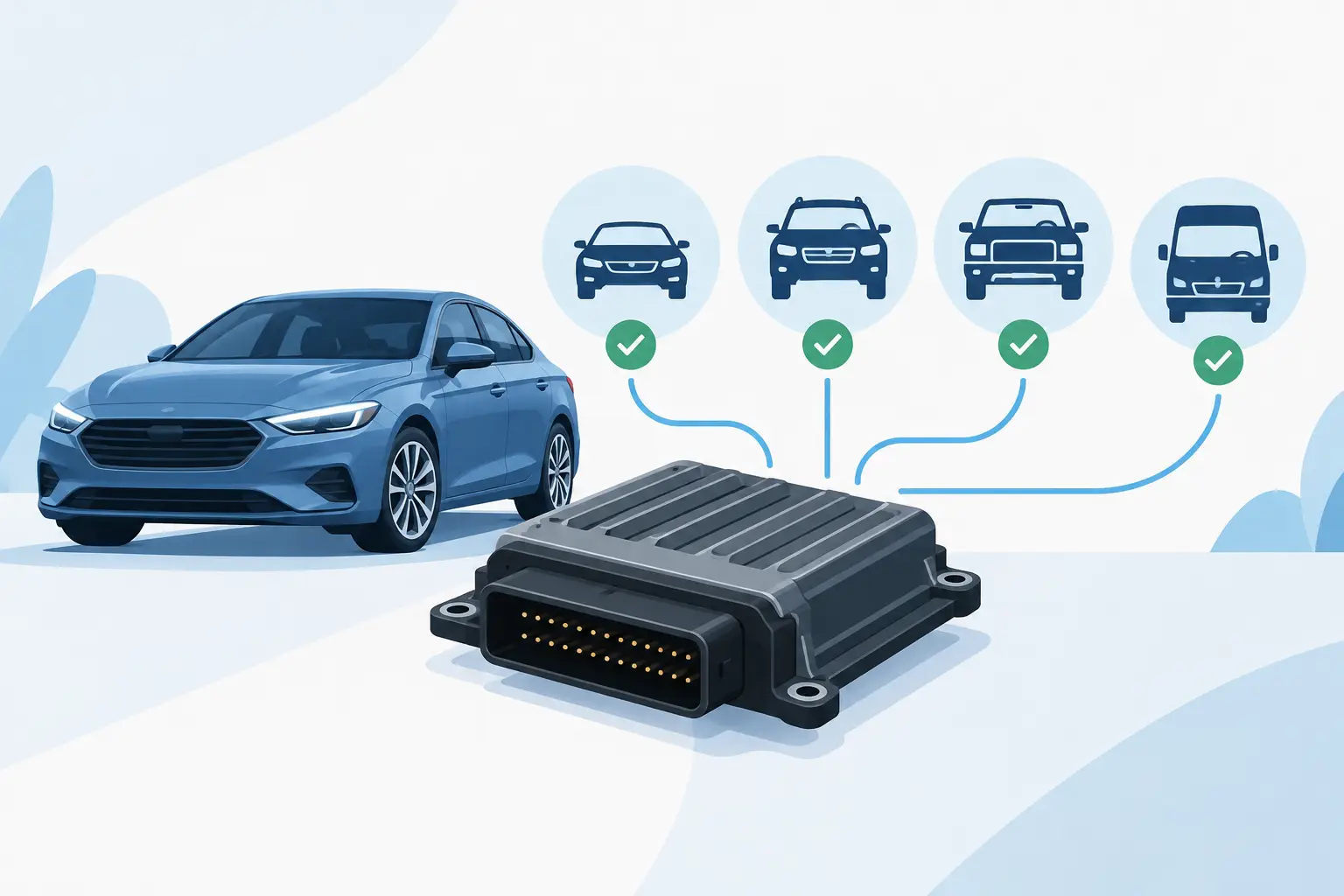
Tuning Module Vehicle Compatibility Explained
A late-model diesel ute can share a badge, body shape and year with another vehicle yet run a different engine calibration, transmission or fuel system. That is why tuning module vehicle compatibility is not something to guess from a Facebook photo or a broad model listing. The right module must suit the vehicle sitting in your driveway, not merely the name on its tailgate.
For Australian owners chasing stronger response, smoother pulling power or better fuel economy, compatibility is the foundation of a worthwhile plug-in upgrade. Get the details right and installation is straightforward. Get them wrong and a product that appears to fit may not be programmed for your exact application.
Why tuning module vehicle compatibility is so specific
A quality tuning module is calibrated to work with the electronic signals and operating characteristics of a particular engine. Vehicle manufacturers regularly revise engines across a model run, sometimes with changes that are not obvious from the outside. A popular 4WD or ute may be available with different engine outputs, fuel systems, emissions equipment and automatic or manual transmissions over the years.
That means “fits Toyota Hilux” or “suits Ranger” is not a meaningful compatibility claim on its own. It tells you almost nothing about whether the module is correct for your engine, build period and variant.
Vehicle-specific programming matters because it supports the result most owners actually want: usable, progressive performance rather than an abrupt or generic-feeling change. A properly matched module is designed around the application, helping deliver stronger mid-range pull for towing, overtaking and loaded driving while maintaining a refined everyday feel.
Generic modules take the opposite approach. They are often sold under several names, supplied with vague fitment claims and promoted as though one calibration can suit a huge range of vehicles. The price may look attractive, but the missing detail is the point. A module is only as credible as the engineering and vehicle data behind it.
The vehicle details that determine the correct module
The more precise the vehicle information, the more confidently a module can be selected. Start with the basics: manufacturer, model, year and fuel type. Then look closer at the details that commonly separate one application from another.
Engine code, capacity and output
Two versions of the same model can have different engine capacities or factory power outputs. Even where capacity is the same, the engine code may identify a different fuel-delivery system or calibration. This is especially relevant for vehicles that have been updated midway through a generation.
Use the vehicle handbook, compliance information or manufacturer documentation where possible. If you are unsure, the VIN can often help confirm the correct variant before ordering.
Transmission and drivetrain
Transmission selection is not a box-ticking exercise. Manual and automatic versions of the same vehicle may have distinct factory settings, and a 4×2 variant can differ from a 4×4 even when the badge and engine look familiar. Select the exact transmission and drivetrain listed for your vehicle rather than choosing the closest option.
This matters particularly for work utes and touring 4WDs, where low-speed control, towing behaviour and load-carrying use are part of the ownership experience. Compatibility should account for the complete vehicle specification, not just peak power figures.
Fuel type and model variant
Diesel and petrol modules are application-specific. So are common variant differences such as single cab, extra cab and dual cab, or standard-output and higher-output editions. A model name alone cannot replace the full identification process.
Be wary of listings that group several engines and fuel types under one part number without explaining how the calibration changes. Clear fitment information is a sign that the supplier understands the product, rather than simply moving boxes.
How plug-in fitment should work
A vehicle-specific tuning module should be designed for clean, practical installation. In most applications, this means purpose-made plugs that connect to the relevant factory sensor connections without cutting, soldering or complicated workshop work.
Before installation, confirm that the plugs, loom length and mounting approach match your engine bay layout. Instructions should identify the connection points clearly and explain how to secure the module away from excessive heat, moving parts and areas where the wiring could be pinched when the bonnet closes.
A plug-in design is valuable because it makes the upgrade accessible to capable owners. It also keeps the process tidy. There should be no improvised wiring, mystery adapters or need to force a connector that does not naturally match. If the plug shape, pin arrangement or connection point appears wrong, stop and recheck the application details.
Installation conditions matter too. Work on a cool engine, keep connections clean and dry, and take your time routing the loom. A few extra minutes spent securing everything correctly is better than treating fitment as an afterthought.
A practical compatibility check before you buy
The easiest way to avoid an incorrect order is to collect the vehicle details before opening a vehicle selector. then confirm the model year, engine, fuel type, transmission and exact variant.
A detailed selector should guide you through these fields in sequence. That process is not unnecessary friction. It is the safeguard that separates an individually programmed product from a generic module marketed to anyone with a similarly named vehicle.
If your vehicle has been imported, modified from factory specification, recently updated, or sits near a model changeover, verify rather than assume. The same applies when buying a used vehicle. Advertisements and private-sale paperwork can describe a vehicle loosely, so check the actual specification instead of relying on the seller’s wording.
At Chip My Diesel, the vehicle finder is built around this principle: identify the exact vehicle first, then findthe module programmed for that application. It is a more reliable approach than shopping by broad vehicle category and hoping the plugs match when the parcel arrives.
Compatibility is more than connector fit
A module can physically connect and still be the wrong choice if its programming does not suit the engine. This distinction is where many low-cost offerings fall short. A connector may be shared across several vehicles, but the calibration required for consistent response and efficient operation can differ considerably.
Engineered, German-designed and manufactured modules are developed with application-specific settings rather than a one-size-fits-all strategy. That attention to calibration is what helps produce controlled gains that feel natural on the road. For a daily driver, that can mean less effort when joining fast-moving traffic. For a touring wagon or towing ute, it can mean more assured acceleration under load and fewer unnecessary gear changes.
Fuel economy can also be part of the appeal, but it depends on how the vehicle is driven. A correctly matched module can support more efficient driving by providing stronger usable torque, allowing the engine to work with less effort in suitable conditions. It is not a promise that every tank will return the same improvement, particularly with heavy loads, short trips, soft tyres or a right foot determined to enjoy the extra response.
Signs a compatibility claim deserves closer scrutiny
Look beyond the headline power figure. A supplier should be able to identify the vehicles a module suits with specificity, explain whether it is plug-and-play, and provide useful installation guidance. Broad claims such as “fits all diesels” or “one chip for every common rail engine” should prompt questions.
Also consider the product’s origin and quality control. Rebadged modules can appear convincing online because the casing and marketing are easy to change. What is harder to replicate is genuine vehicle-by-vehicle programming, consistent manufacturing standards and a supplier that can clearly explain why a particular unit suits your exact vehicle.
The best purchase decision is usually the least dramatic one: match every vehicle detail, choose a properly engineered module, install it carefully and enjoy the difference from the driver’s seat. When compatibility is treated as the starting point rather than a footnote, performance and economy goals become far more straightforward to pursue.
Happy Driving!